 Luật sư bảo vệ cho bên vay bên thế chấp ngân hàng
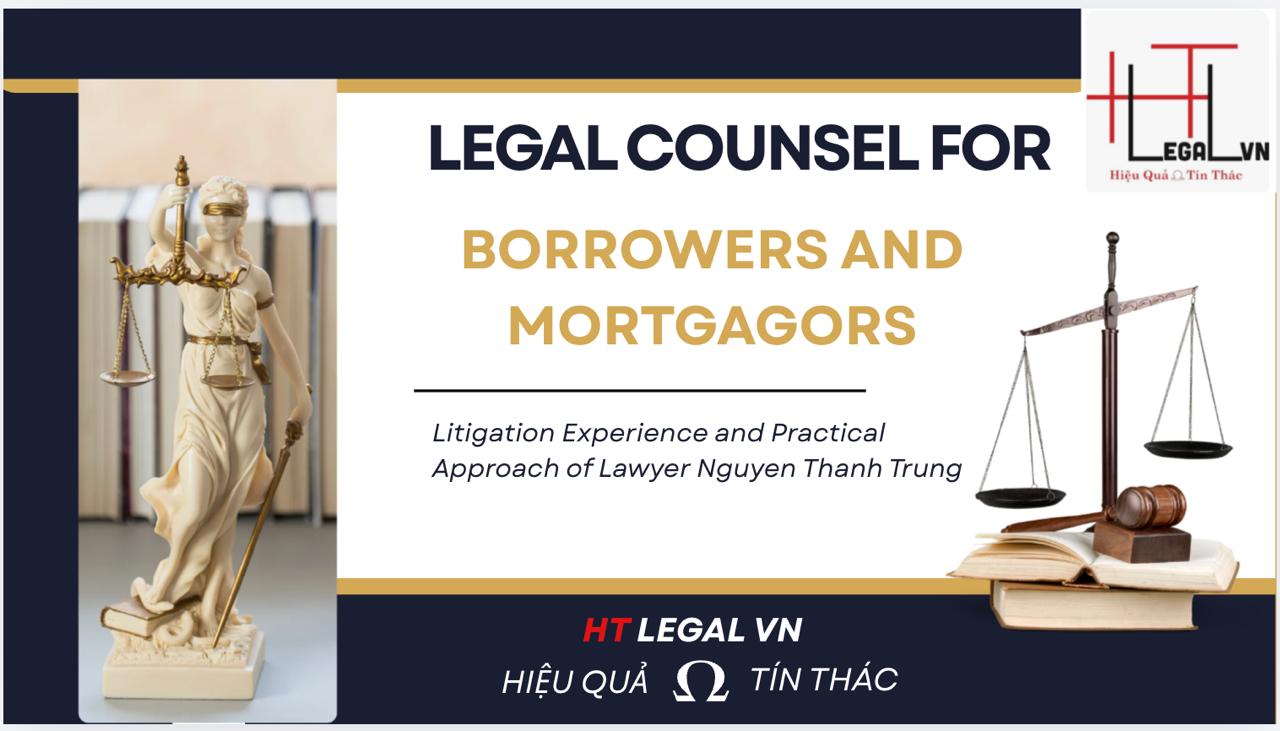
Litigation Experience and Practical Approach of Lawyer Nguyen Thanh Trung
In credit and secured transaction disputes, it is often assumed that once a default occurs, the borrower is placed in a completely disadvantaged position.
That assumption is not entirely accurate.
Repayment obligations constitute one legal issue.
The creditor’s right to enforce security is another.
The law does not negate lawful debt obligations.
However, it does not permit enforcement actions beyond the scope of contractual agreements and statutory requirements.
Debt creates responsibility. The protection of rights remains a legal principle.
1. Indebtedness Does Not Eliminate Legal Rights
In many credit disputes, borrowers acknowledge outstanding obligations. Nevertheless, when secured assets are repossessed or enforced, several legal questions must be examined:
• Have the conditions for enforcement legally arisen?
• Does the scope of security exceed the actual outstanding obligation?
• Are interest rates, penalties, and fees consistent with contractual terms and applicable law?
• Were notice, repossession, valuation, and enforcement procedures conducted in compliance with statutory requirements and contractual provisions?
Under the 2015 Civil Code of Vietnam, enforcement of secured assets must be based on valid agreements and carried out in accordance with prescribed legal conditions.
The right to repossess is not the right to act arbitrarily.
Procedural deficiencies may significantly alter the outcome of a dispute.
2. Conflicts Among Borrower, Mortgagor, and Bank
In many cases, the borrower and the mortgagor are not the same legal entity. Upon default:
• The borrower may seek restructuring or extension;
• The mortgagor may seek to preserve ownership of the secured asset;
• The bank exercises its right to enforce security to recover debt.
Effective legal representation requires a clear separation of:
• The actual outstanding obligation;
• The legal status and value of the secured asset;
• The contractual and statutory limits of enforcement rights.
In credit disputes, substantial losses often arise not from the debt itself, but from the manner in which secured assets are enforced.
3. Court Proceedings: Documentation Determines Position
Once the dispute is brought before the Court, the matter is no longer governed by negotiation, but by evidence and legal interpretation.
In court, sentiment carries no weight. Contractual terms and documentary evidence do.
Representation of borrowers or mortgagors typically involves:
• Reviewing the validity of credit agreements and security contracts;
• Verifying calculations of principal, interest, penalties, and fees;
• Interpreting enforcement clauses in light of statutory provisions;
• Examining the legality of repossession, valuation, and auction procedures.
In credit litigation, the party who controls the documentation controls the advantage.
An error in procedure may give rise to additional legal liabilities or affect the legitimacy of enforcement.
4. Enforcement Stage: Where Actual Loss Is Determined
Even after a judgment becomes legally effective, the dispute may not be practically resolved.
The enforcement phase determines the real financial consequences, including:
• Asset valuation;
• Auction procedures;
• Allocation of proceeds;
• Determination of any remaining obligations of the borrower.
A judgment defines liability. Enforcement determines the actual loss.
In certain cases, the most significant risks arise not from the court ruling itself, but from the subsequent enforcement process.
Close monitoring of enforcement proceedings is essential to prevent losses exceeding lawful obligations.
5. Professional Position
Legal representation of borrowers or mortgagors does not aim to deny lawful obligations.
The objective is to ensure that:
• Obligations are accurately determined;
• Enforcement rights are exercised lawfully;
• Losses do not exceed the legal scope permitted by contract and statute.
The law does not protect haste. It protects those who understand and apply it correctly.
Guided by the principle:
Correct in Law – Practical Solutions – Steadfast Protection
Lawyer Nguyen Thanh Trung approaches credit and secured transaction disputes through comprehensive review of contractual frameworks, evidentiary control, and strategic litigation management to safeguard the lawful rights and interests of clients within the boundaries of Vietnamese law.